 Harmo Auto
By Lucas · Harmo Auto · 20 October 2026
A vehicle shipment can look like a giant car park boarding a ship. BYD’s 2024 report describes EXPLORER NO.1 as a 199.9-metre vehicle carrier with 7,000 standard vehicle spaces. Those spaces are a vessel-capacity measure, not a promise that every sailing carries 7,000 SUVs.
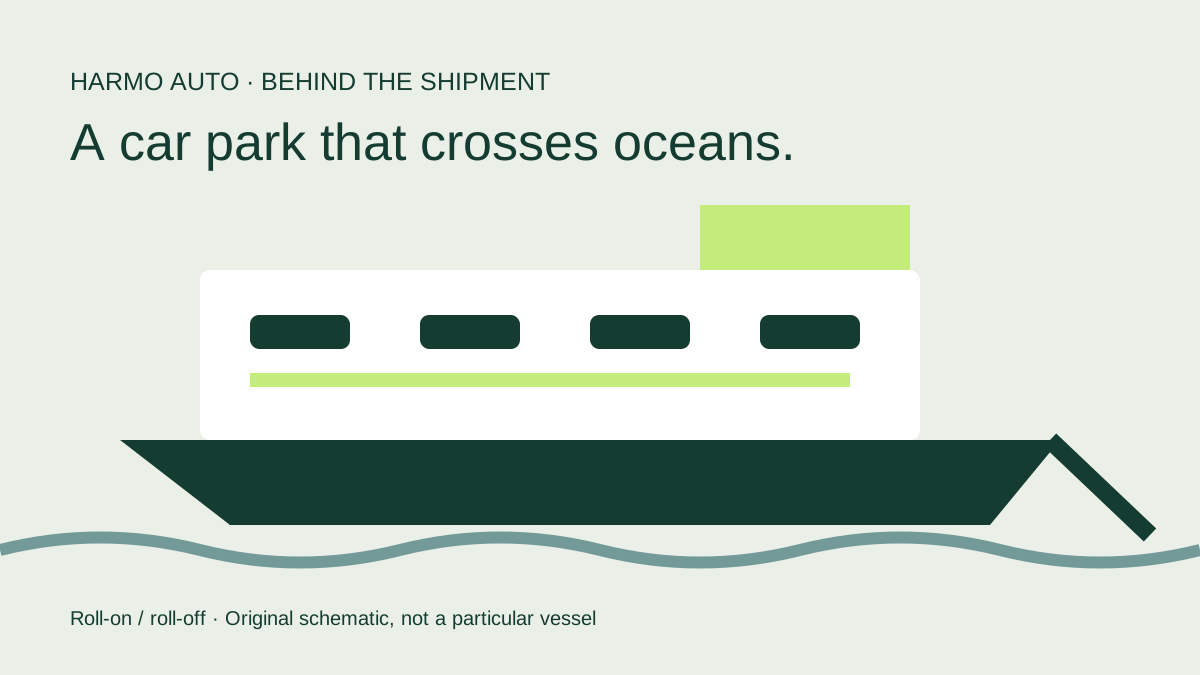
Why it is called roll-on/roll-off
The cars use ramps to enter and leave the ship. That is where the abbreviation ro-ro comes from. Think of the vessel as a multi-storey car park that happens to cross an ocean. The illustration here explains the idea; it is not a drawing of a specific ship.
“Ready” can mean several different things
When arranging car shipping from China, ask what a supplier means by ready. Has the car been located, checked, moved to the port, accepted for a sailing or loaded? Each is a different point in the shipment. A photograph beside a ship can be useful, but ask which vehicle it shows and when it was taken.
One small habit that avoids confusion
Write down the milestone beside each date: expected port arrival, planned loading or confirmed departure. Agree who checks the condition, keys and accessories at handover, and which documents you will receive. It is a less dramatic conversation than the launch of a new car carrier, but it is the one that connects a shipment to your order.
Sources & editorial note
Figures checked on 20 October 2026. Manufacturer claims are identified as such; the purchasing interpretation is Harmo Auto’s own.